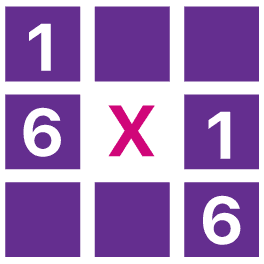
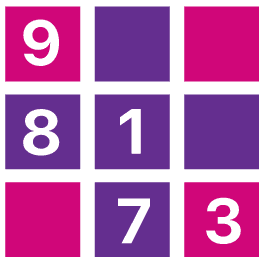
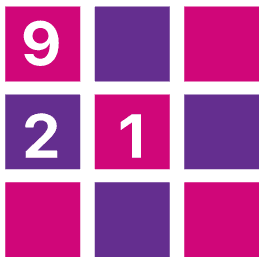
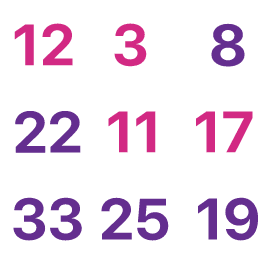
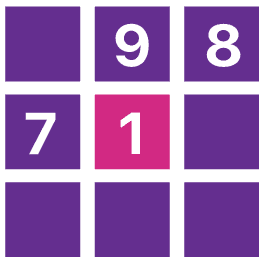
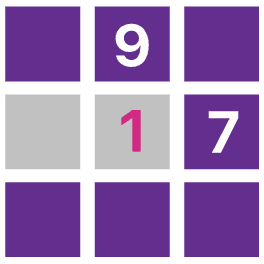
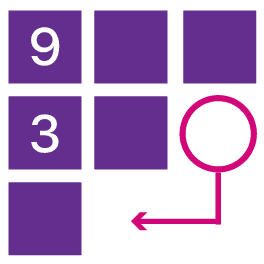
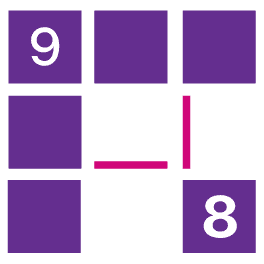
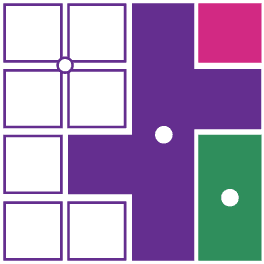
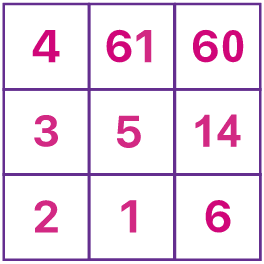
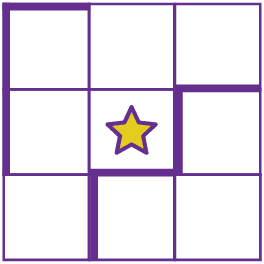
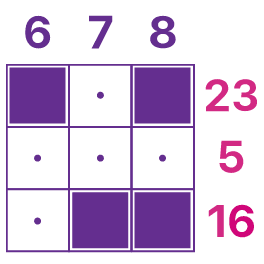
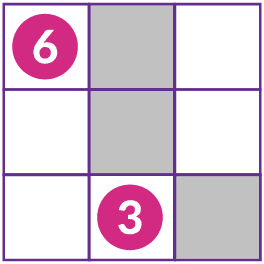
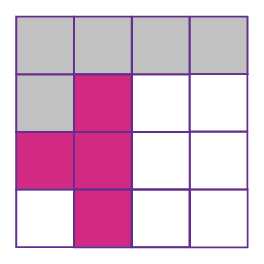
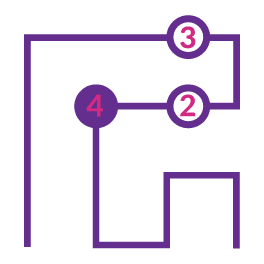
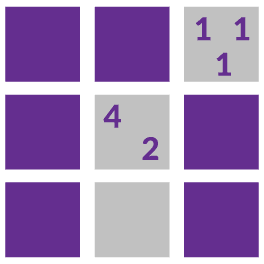
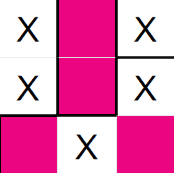
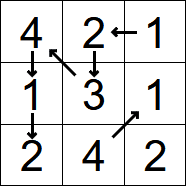
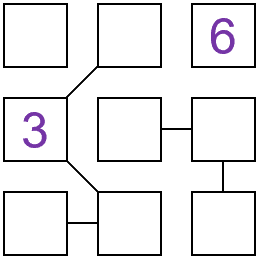
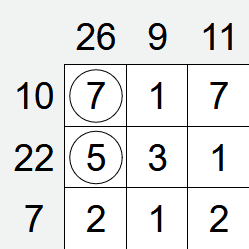
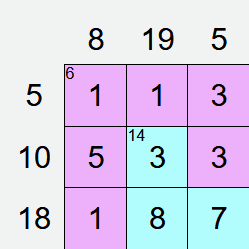
This is an example of a completed Range puzzle. The aim is to fill the grid with black and white cells
so that these conditions are met,
Each numbered cell can 'see' that many white squares in total by looking in all four
horizontal/vertical directions, and counting itself. Black squares block the view.
No two black squares can be next each other horizontally or vertically (diagonally is
ok).
The white cells must form one contiguous whole, i.e. it is not allowed for one group
of white cell(s) to be separated from any other white cells by black cells.
This is a starting Range puzzle. We know that any cells with numbers in have to be white, so these cells
are pre-filled.
In the top-left of this puzzle we have a '15' and a '5' clue next to each other. This doesn't
tell us that much about the '5', but we can fill some cells for the '15' clue.
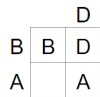
We know that the
Range for the '5' clue can't extend to cell A or beyond (otherwise we'd be able to see more than
5 cells).
This also gives us a maximum limit of 5 cells in this row for the '15' clue. Normally
we would conclude that the cell above the '15' could be white, but this also
means we definitely have to extend downwards by a number of cells.
In fact, with this restriction, the only way to satisfy the '15' clue is that the full column is filled
White, and the row extends to the cell containing the '7' (but no further).
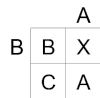
We can also look at the cell containing the '16' clue below cell B. This puzzle has a width of 11 cells,
so we know that the Range of white cells for this cell must expand in to cell B (and further upwards).

 Range leaderboard
 How to play