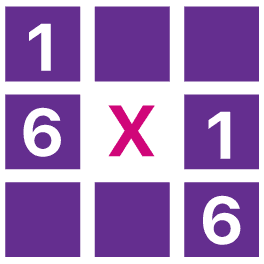
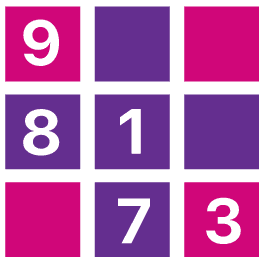
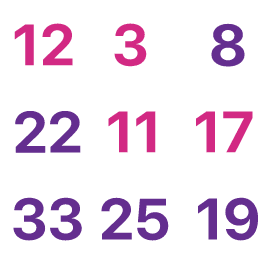
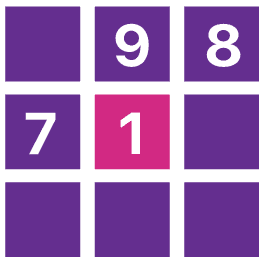
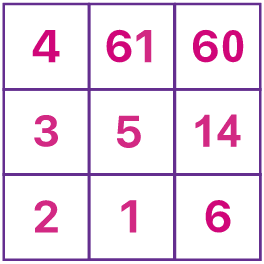
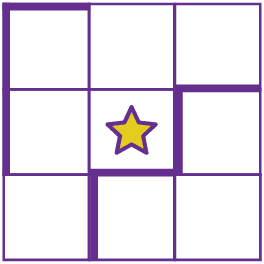
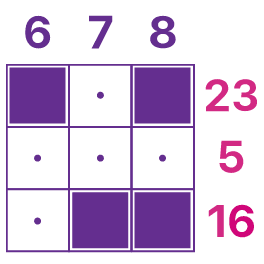
Hitori is a game played on a rectangular grid of numbers. The aim is to eliminate cells (by turning them black),
so that the following rules are followed,
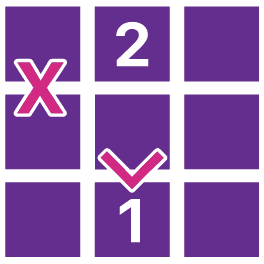
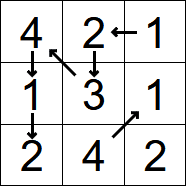
Each row and column may only contain each number once (i.e. in white). Note that this does not mean that a row or
column has to contain any particular number.
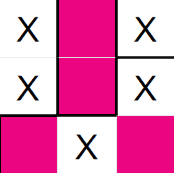
You can't have two black cells next to each other. Linked diagonally is fine.
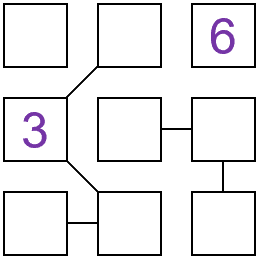
All the white squares must be one single connected whole, i.e. from any white starting square,
you must be able to reach any other white square by only moving to adjacent white squares. Diagonal
moves are not allowed.
From these rules we can make a few conclusions,
If you decide a particular square is black, then all the squares next to it must be white (see rule 2).
If you have decided a particular square is white, then all other squares in the same row/column with
the same number must be black.
If turning a cell black would create two separate areas of white cells, then that cell must be white.
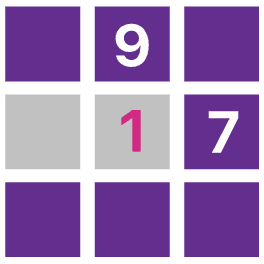
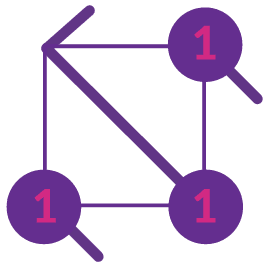
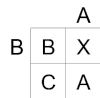
In a sequence of three squares with the same number, the one in the middle must be white,
to avoid having two black numbers next to each other.
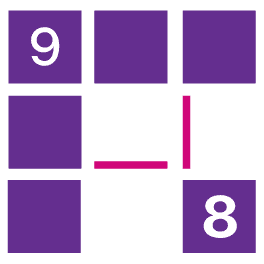
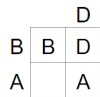
Similarly, if you have a square between two identical squares, then your original square must be
white, as one of the two identical squares must be black.
If a row contains two identical squares next to each other, then all other squares in that row with
the same number must be black. One of the two identical squares must be white, so any other squares
in the same row with the same number must be black.
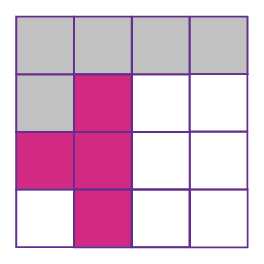
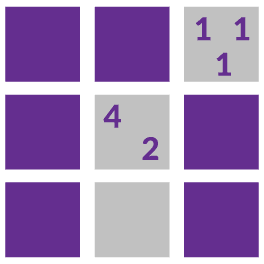
If you have a set of 2*2 squares with all the same numbers, then two of them must be black,
and they must be diagonal from each other. Similarly, two of them must be white. There's only
two possibilities for this, it is often worth looking to see if one of the possibilities would cut off
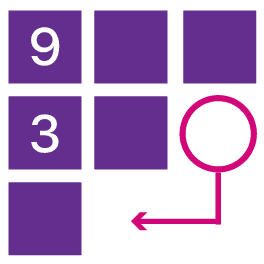
another white section of the grid. If this set of 2*2 squares is in the corner, then the square in the
corner must be black, otherwise you're going to cut off a white square from the rest of the grid.
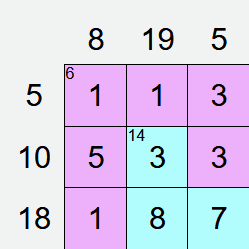
This is an example of a completed Hitori puzzle. Note that the each row and column has only one of each
number in white, there aren't any black cells touching another black cell, and all the white cells are
one single connected whole.
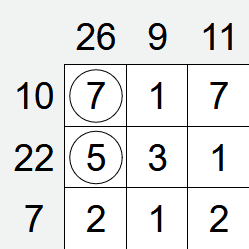
This is an example of a starting grid. I have highlighted two cells that we can start with.
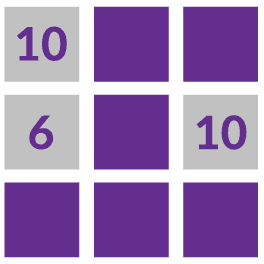
Look at the left-most column. There are two 7s together at the bottom, since we can't have remove
both of these cells, one must be black, the other must be white. We don't know exactly which way round
(yet). Since we can only have one white number in each column, the highlighted 7 must be eliminated.
We can apply the same technique to the highlighted 6, but by looking at the row instead.
We can also go a step further, since eliminated black cells can't touch any other eliminated black
cells, then all the cells around the 7 and the 6 must be white.
We now have 7 cells in white. For each of these we can now look at each in turn, and eliminate any
duplicates from the row/column.
That gives us this grid. We now apply the same process again, all the cells surrounding any black cells
must be white.
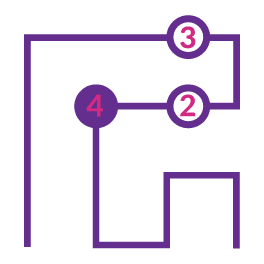
This is where rule 3 starts to come in to play. The white cells must be one single connected whole.
We have a 4 in the top-left with a 2 just to the right of it. This 2 must be white, otherwise the 4 would
be isolated and we would have created two islands of white cells.
We can apply this same reasoning to the white 2 in the left-most column, the 7 next to it must also be white.
We can now apply these same rules to finish this puzzle.


 Hitori leaderboard
 How to play